

This helps investors, lenders, and leaders assess performance, funding needs, and overall financial strength. Inventory includes amounts for raw materials, work-in-progress goods, and finished goods. The company uses this account when it reports sales of goods, generally under cost of goods sold in the income statement.
Effects on financial statements and metrics

General Ledger tab – Each journalentry is posted automatically to the general ledger. Use thedrop-down button to view the unadjusted and adjusted balances inthe General Ledger. Key practical differences are often procedural (e.g., how and when par/stated value is used, statutory requirements for capital increases) rather than fundamental measurement differences.
- Below is a short video explanation to help you understand the importance of retained earnings from an accounting perspective.
- In contrast, a sole proprietorship can be started in minutes, sometimes with nothing more than opening a business checking account.
- The $700 prior period correction is reported as an adjustment to beginning retained earnings, net of income taxes, as shown in (Figure).
- For example, the PP&E balance of $100 million in Year 0 increases by the full $20 million in Capex.
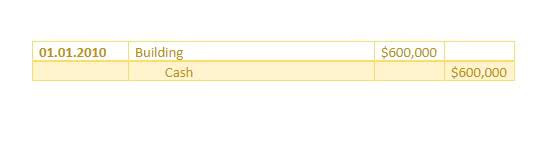
- For example, a company will have a Cash account in which every transaction involving cash is recorded.
Overview of share repurchases
The balance sheet reports the assets, liabilities, and owner’s (stockholders’) equity at a specific point in time, such as December 31. The balance sheet is also referred to as the Statement of https://www.bookavoice.se/12-best-chicago-il-bookkeeping-services-3/ Financial Position. If a corporation has a limited amount of cash, but needs an asset or some services, the corporation might issue some new shares of stock in exchange for the items. When shares of stock are issued for noncash items, the items and the stock must be recorded on the books at the fair market value at the time of the exchange.
How Retained Earnings Impact Shareholder Value?
If the income statement common stock has a par value, then whenever a share of stock is issued the par value is recorded in a separate stockholders’ equity account in the general ledger. Any proceeds that exceed the par value are credited to another stockholders’ equity account. This required accounting (discussed later) means that you can determine the number of issued shares by dividing the balance in the par value account by the par value per share. Let’s look at the stockholders’ equity section of a balance sheet for a corporation that has issued only common stock. There are 10,000 authorized shares, of which 2,000 shares had been issued for $50,000.
Statement of Stockholders’ Equity
Shareholder equity is a fundamental concept in corporate finance, reflecting the residual interest in the assets of a company after deducting liabilities. It represents the amount that shareholders would receive if all the assets were liquidated and all the company’s debts were paid off. This financial metric is a key indicator of a company’s health and provides insights into its capital structure. Shareholder equity can be found on a company’s balance sheet and is often referred to as the book value of the company.

For example, a positive change in plant, property, and equipment is equal to capital expenditure minus depreciation expense. If depreciation expense is known, capital expenditure can be calculated and included as a cash outflow under cash flow from investing in the cash flow statement. Any amount remaining (or exceeding) retained earnings is added to (deducted from) retained earnings. General Journal tab – Prepare thejournal entries to record the transactions that occurred fromJanuary 1-31. Then prepare the necessary adjustingentries at January 31 to correctly report net income for theperiod.